Storyboarding as a metaphor for life
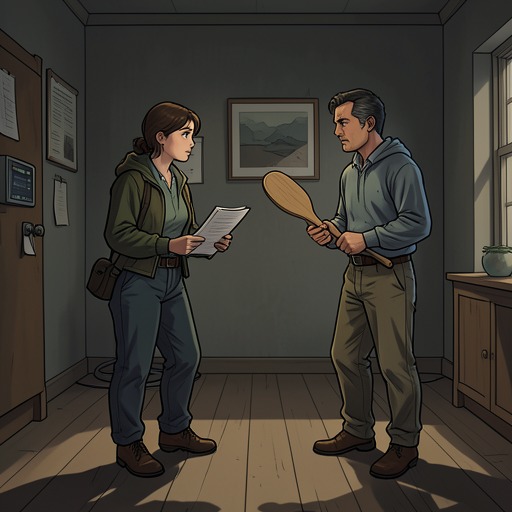
Midwinter BreakStoryboarding as a metaphor for life turns a film-making method into a way of thinking about personal direction. In the conversation between Stella and Gerry, storyboarding means laying out in advance what someone wants to happen; Stella takes to the term and later uses it to describe her life. The metaphor’s force lies in its promise of agency: life might be arranged as a sequence rather than endured as drift. But the future Stella is trying to shape does not necessarily include Gerry, and the image of a plan exposes the distance between their expectations.
From film technique to personal metaphor
Gerry explains storyboarding as a movie term: a comic is drawn first, then filmed, so that what is intended to happen can be set out beforehand. This definition gives the metaphor a concrete structure. It is not simply wishing for a particular outcome; it is imagining a sequence and deciding how its parts should fit together. The film analogy also implies a difference between a preliminary design and what eventually takes place. A storyboard can specify intentions, but it is not itself the finished film.
Stella likes the word. Her response matters because it marks a shift from Gerry’s explanation of a technique to her adoption of it as a personal idea. She later describes herself as storyboarding her life, using the phrase not to name a film project but to explain the thought occupying her. The term offers her a vocabulary for imagining a future that she has not yet reached and whose shape remains unsettled.
The surrounding conversation briefly places this interest in planning beside Stella’s cryptic crosswords. She completes two during the flight to Amsterdam, one from the morning paper and another clipped from Sunday’s paper and kept in her Filofax. She thinks of them as mental exercise for her very old age. The crossword and the storyboard are different activities, but both involve working with parts: clues and answers in one, anticipated events in the other. The text does not equate them, yet their proximity makes Stella’s attention to thought, memory, and what lies ahead especially visible.
A life under reconsideration
When Stella later says she is storyboarding her life, the phrase occurs amid a description of distance within her marriage. She tells Gerry that she is tired of living as they do. Her concern is not presented as a settled plan with every step already decided; it is an attempt to think through a different way of using the time she has left. She says she wants to do something with that time other than watch him drink. Storyboarding therefore names an active reconsideration of her days, with his drinking part of the life she wants to move beyond.
Stella connects this possible future to charity and prayer. She explains that she is exploring, and that the exploration depends on belief in ways Gerry may not understand. When he asks what would follow if she found what she was looking for, she says it would be good, while also acknowledging that it would lead to other, more difficult questions. That qualification keeps the metaphor from becoming a neat image of total control. She can picture a direction without claiming to know all the consequences or answers in advance.
Her use of the word is thus both purposeful and provisional. She wants to make something of the time available to her, but the prospect she is considering opens further questions rather than resolving them. The storyboard is a means of orientation, not proof that the future can be completely planned. Its imagined sequence remains subject to uncertainty, belief, and choices whose effects Stella cannot yet fully know.
The marriage in the frame
Gerry’s question about whether he appears anywhere in Stella’s storyboard makes the metaphor relational. He asks whether her imagined future includes him, and Stella answers that it does not, really. The exchange gives the idea its sharpest consequence: a plan for a life can also reveal who is absent from the life being imagined. Her answer does not supply a complete account of what will happen to the marriage, but it makes clear that she is no longer treating their shared future as self-evident.
The brief answer also contrasts with the uncertainty in Stella’s exploration. She does not know exactly where prayer and charity will lead, and she anticipates difficult questions; nevertheless, she can say that Gerry is not really part of the picture she is currently making. In this moment, the storyboard is less a promise of a finished design than an honest measure of the distance between them. Gerry wants to know his place in her plans, while Stella’s answer shows that her search has acquired an independent direction.
Planning against lived reality
The metaphor gains an additional edge from what happens after this conversation. Stella is asleep, and Gerry notices that her book is too close to her face; he moves it to the bedside table. He then retrieves a half-bottle from his jacket, goes into the bathroom, conceals the sound of opening it with a cough, and pours himself a drink. He later refills the glass and tops it up with water. This concealed drinking follows Stella’s stated wish to do more with her remaining time than watch him drink. The contrast turns her storyboard into more than an abstract figure for self-improvement: it sits beside the repeated behavior that helps explain why she wants a different life.
The scene also distinguishes the order of an imagined plan from the habits continuing in the present. Stella can name a possible direction, but Gerry’s actions show that the existing pattern has not simply ended because she has spoken about change. The book he moves and the hidden bottle occupy the same bedroom, one gesture of care beside an act of concealment. The narrative does not claim that a storyboard can guarantee transformation. Instead, it makes the gap between intention and conduct legible.
As a concept, storyboarding holds together foresight and limitation. It gives Stella a language for making choices about the time ahead, especially as she considers prayer, charity, and a life not organized around Gerry’s drinking. At the same time, her uncertain questions and his private return to alcohol prevent the image of planning from becoming a tidy solution. The future can be imagined in scenes, but it must still be lived—and the life Stella is beginning to envisage may place her and Gerry in different places.